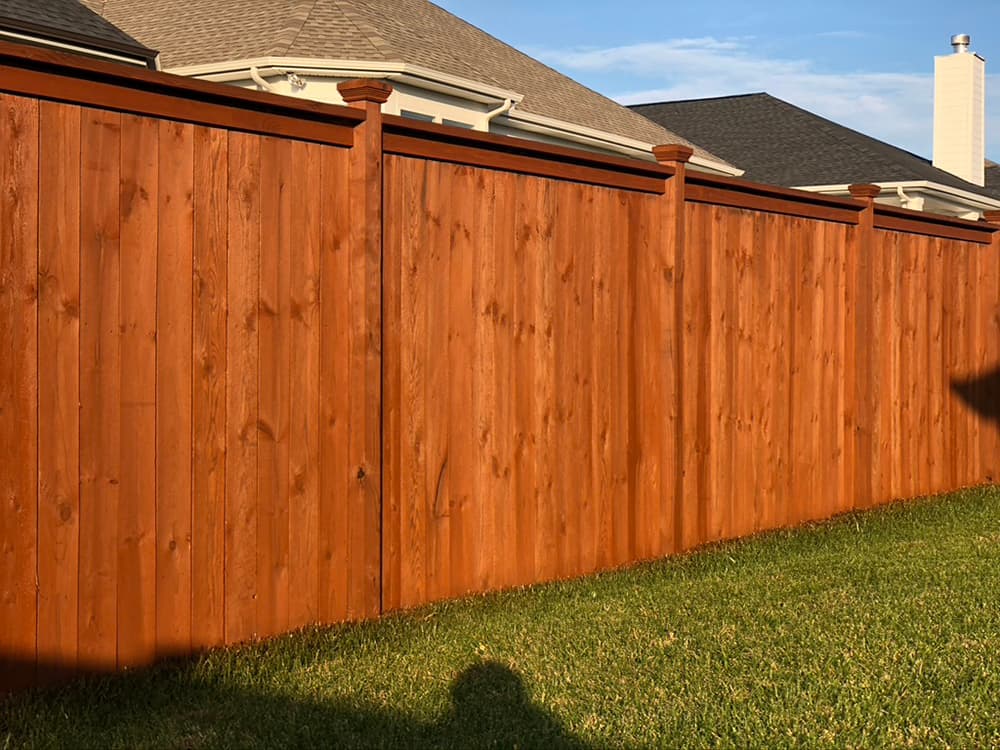
Start With the Wood, Not the Color Chip
The most important factor in stain color selection is the condition and species of your wood. Fresh pressure-treated pine has a strong green or yellow undertone from the treatment chemicals. New cedar has a distinctive reddish warmth. Weathered gray wood is an entirely different surface than new wood. The stain color that looks great on a sample board at the store may look completely different on your 3-year-old fence. Always test your stain color on your actual wood, in your actual light conditions.
Semi-Transparent vs. Semi-Solid vs. Solid
Semi-transparent stains show the most wood grain and are best for wood in good condition — they enhance natural beauty rather than cover it. Semi-solid stains show some grain texture while providing more color depth and coverage. They're ideal for wood that has some weathering but isn't severely damaged. Solid stains provide full color coverage with minimal grain show-through, similar to a thin paint. They're best for older wood with significant graying or surface imperfections you want to conceal. The tradeoff: the more solid the stain, the more it behaves like a film product — higher maintenance, potential peeling over time.
Natural vs. Gray Tones
EXPERT® Stain & Seal products include warm natural tones (Cedar Tone, Honey, Pecan, Walnut) and cooler or darker options (Slate Gray, Charcoal, Black). Natural warm tones complement homes with wood siding, brick, and traditional architectural styles. Cool gray and darker tones work well with modern, farmhouse, and contemporary homes. Both families work across fence and deck applications — the choice is primarily architectural and personal preference.
Consider Maintenance Before You Commit
Darker stain colors are more forgiving on vertical surfaces — they fade more gracefully than light tones. Lighter natural tones show graying and weathering faster on horizontal surfaces that receive heavy UV. If you want a maintenance interval of 3–5 years rather than 2–3, lean toward a medium-to-dark penetrating stain. The most practical choice is often the one that looks the best at the 4-year mark, not the one that looks the best on day one.