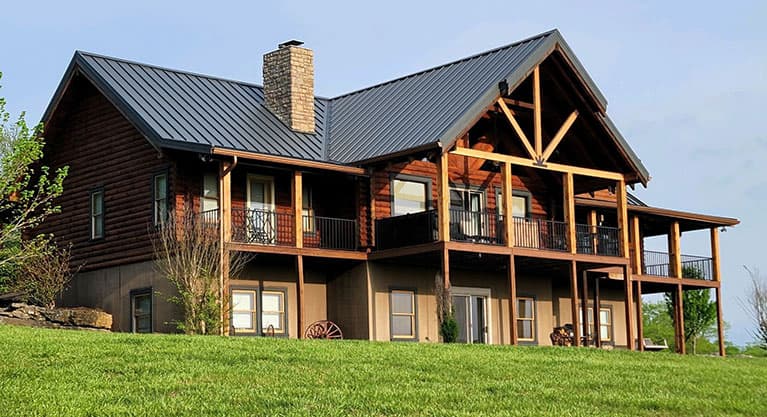
What Makes Log Home Care Different
Deck and fence staining is relatively forgiving — miss a spot and you get some graying in that area. Log home care is less forgiving because the consequences of moisture intrusion are more severe. A log that gets wet and stays wet can develop rot that spreads through the core of the log without any visible exterior sign. By the time you see soft spots or discoloration, the structural integrity of that log may already be compromised. Log home care is maintenance-critical in a way that fence staining simply isn't.
Tennessee's Climate Is Hard on Logs
Middle Tennessee's climate — humid summers, freeze-thaw cycles in winter, and heavy spring rains — creates exactly the conditions that stress log homes. High humidity keeps moisture levels in the wood elevated for months at a time. Freeze-thaw cycles open and close the checks (natural cracks in the logs) repeatedly. Spring rains penetrate anywhere the stain or chinking has failed. Homes in shaded areas or near water are particularly vulnerable because the wood doesn't get the drying benefit of sun exposure.
The Annual Inspection Checklist
Walk your log home every spring and fall. Look for: checks that have widened since your last inspection; areas where the stain has faded to the point where water no longer beads; chinking or caulk that has separated from the log face; any discoloration (dark brown or black) that suggests moisture intrusion or mold; and soft spots, which indicate rot has begun. Early detection on any of these issues means a repair — late detection often means log replacement.
Staining Schedule
Most log homes need a full restaining every 3–7 years depending on exposure and the original stain application quality. The south and west walls typically wear faster because they see more direct sun. Pay attention to sun-facing walls — they often need touch-up between full applications. The stain product matters enormously. EXPERT® Professional Log Home products are penetrating oil formulas specifically designed for the thick, textured surfaces of log construction. Film-forming products peel on log homes because the wood moves too much to allow a surface coating to stay bonded.
Borate Treatment — The Insurance Policy
Borate wood preservatives soak into the log and provide protection against wood-boring beetles, termites, and wood rot fungi. Applied during restoration or as a standalone treatment, borates are the single best preventive investment a log home owner can make. They're water-soluble, so they need to be applied before the exterior stain coat seals the wood. Stain & Seal Experts applies borate treatment as part of every log home restoration project.