Gray Is Not Normal Aging
Most homeowners assume a graying fence is just natural aging — the wood getting older and showing it. That's not what's happening. The gray color is the result of UV radiation breaking down the lignin in the wood's surface fibers. Lignin is the natural polymer that holds wood cells together and gives the wood its color. When it degrades, the surface cellulose fibers are exposed, and those fibers turn gray and fuzzy under a microscope. Functionally, gray wood is wood that has lost its surface protection against moisture.
The Moisture Problem That Follows
Once the surface lignin breaks down, moisture moves in and out of the wood more freely with every rain and every dry period. This expansion-and-contraction cycle causes the wood to check (develop small surface cracks), warp at the ends, and eventually split. What started as a cosmetic issue — a gray fence — becomes a structural one. Left untreated, the cycle accelerates. Black mold begins colonizing the surface once moisture is consistently present. What you're looking at 3–5 years after the fence was built is often a combination of UV graying, moisture damage, and mold staining — all three at once.
How to Reverse It
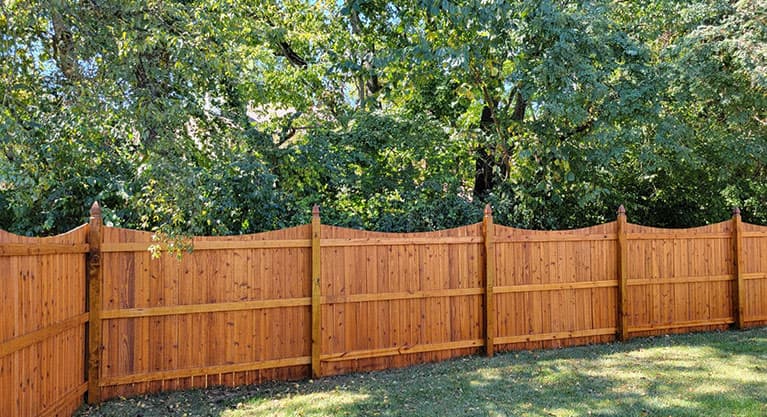
The good news: surface graying is reversible if you catch it before structural damage has occurred. The process starts with a wood brightener — an oxalic acid-based product that chemically reverses UV graying and lifts mold staining from the surface. Applied with a brush and rinsed clean, a quality brightener can make a severely gray fence look like new wood in a single application. The key is what happens next. Once the wood is brightened and fully dried (24–48 hours), it needs to be sealed against the UV that caused the problem in the first place. A penetrating stain — not a surface film product — should be the next step.
Why Penetrating Stain Beats Film Products
Film-forming products (solid stains, paints) sit on top of the wood and eventually peel as the wood moves beneath them. A penetrating oil-based stain soaks into the wood fibers themselves, protecting from within. When it comes time to re-apply, you're adding another layer into the wood — not scraping off a failed film first. EXPERT® Stain & Seal products use this penetrating approach, which is why our customers see 3–5 year intervals between maintenance coats instead of the 1–2 year cycle they experienced with big-box deck stains.
When to Call the Pros
If your fence is graying uniformly without structural damage (no soft spots, no deep splits), a DIY clean-and-stain is achievable for handy homeowners. If you're seeing black mold, peeling from a previous coating, or soft boards, you're better served by a professional who can assess the extent of the damage, perform the strip and restore work safely, and deliver a consistent finish across the entire fence. Stain & Seal Experts offers free estimates across Middle Tennessee — we'll tell you honestly whether it's a simple maintenance job or a full restoration.